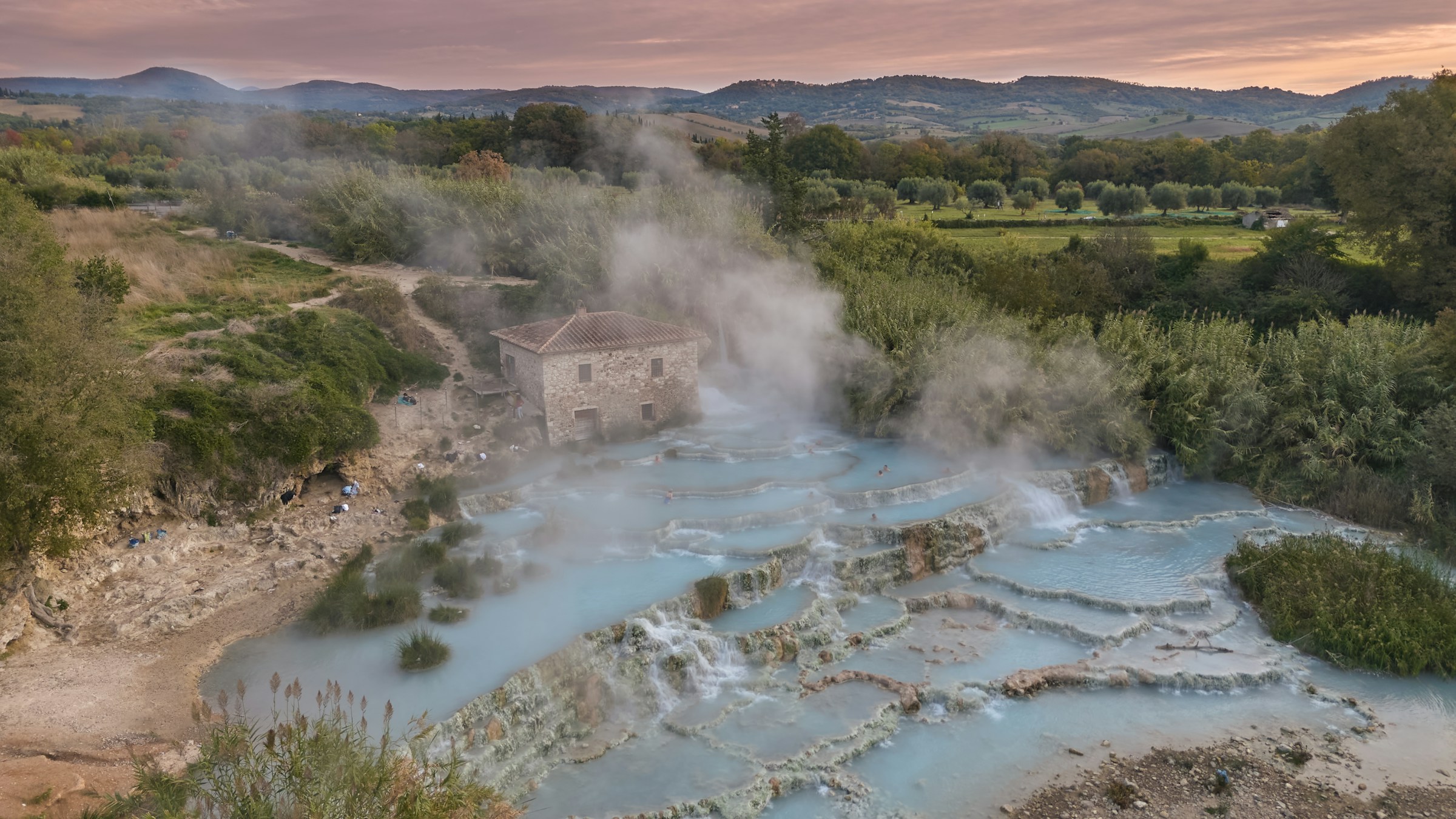
Sulphurous water leaves the ground at about 37.5°C and spills down a stair of travertine pools below an old mill. The pools are free, open at any hour, and best before the coaches from Grosseto arrive.
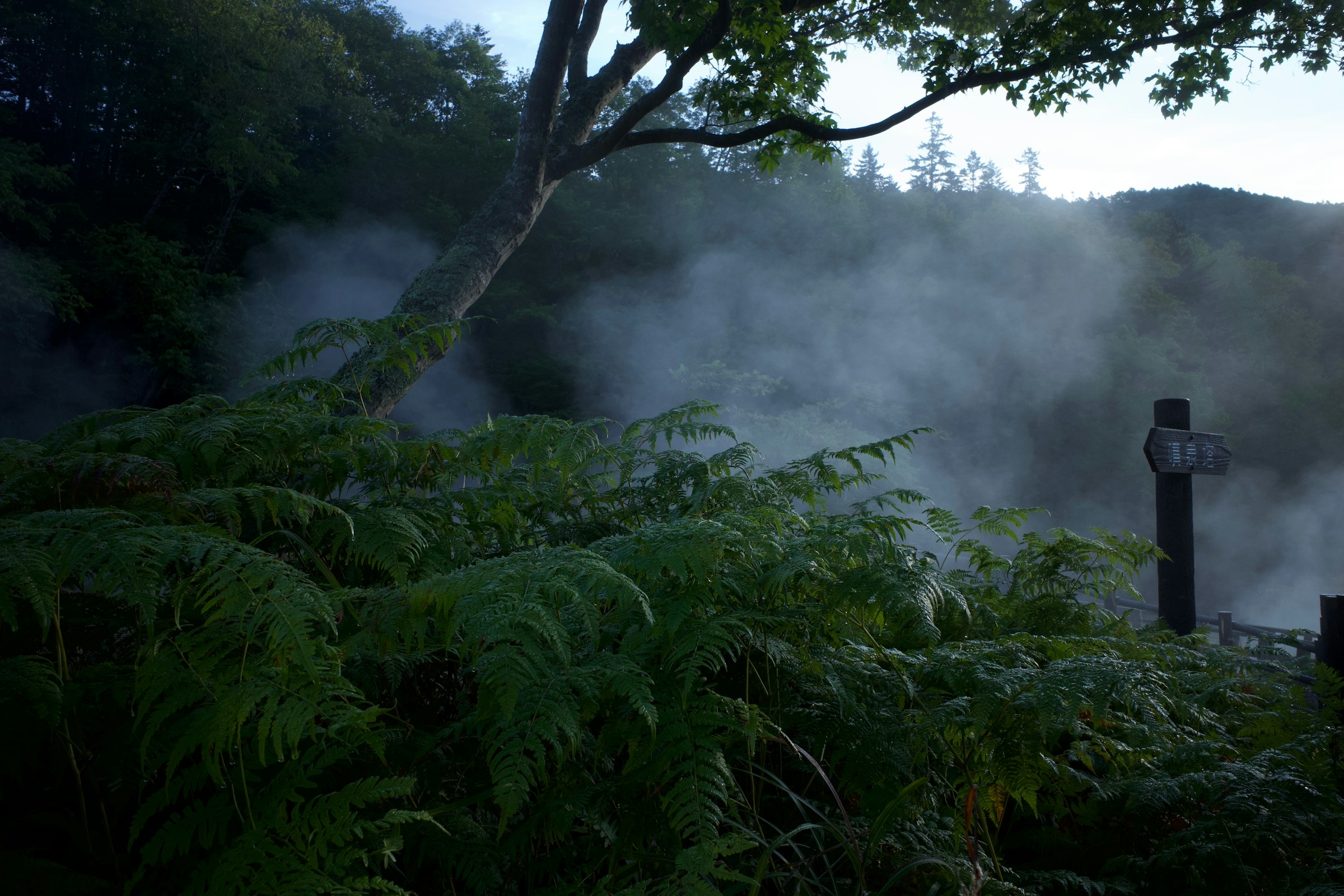
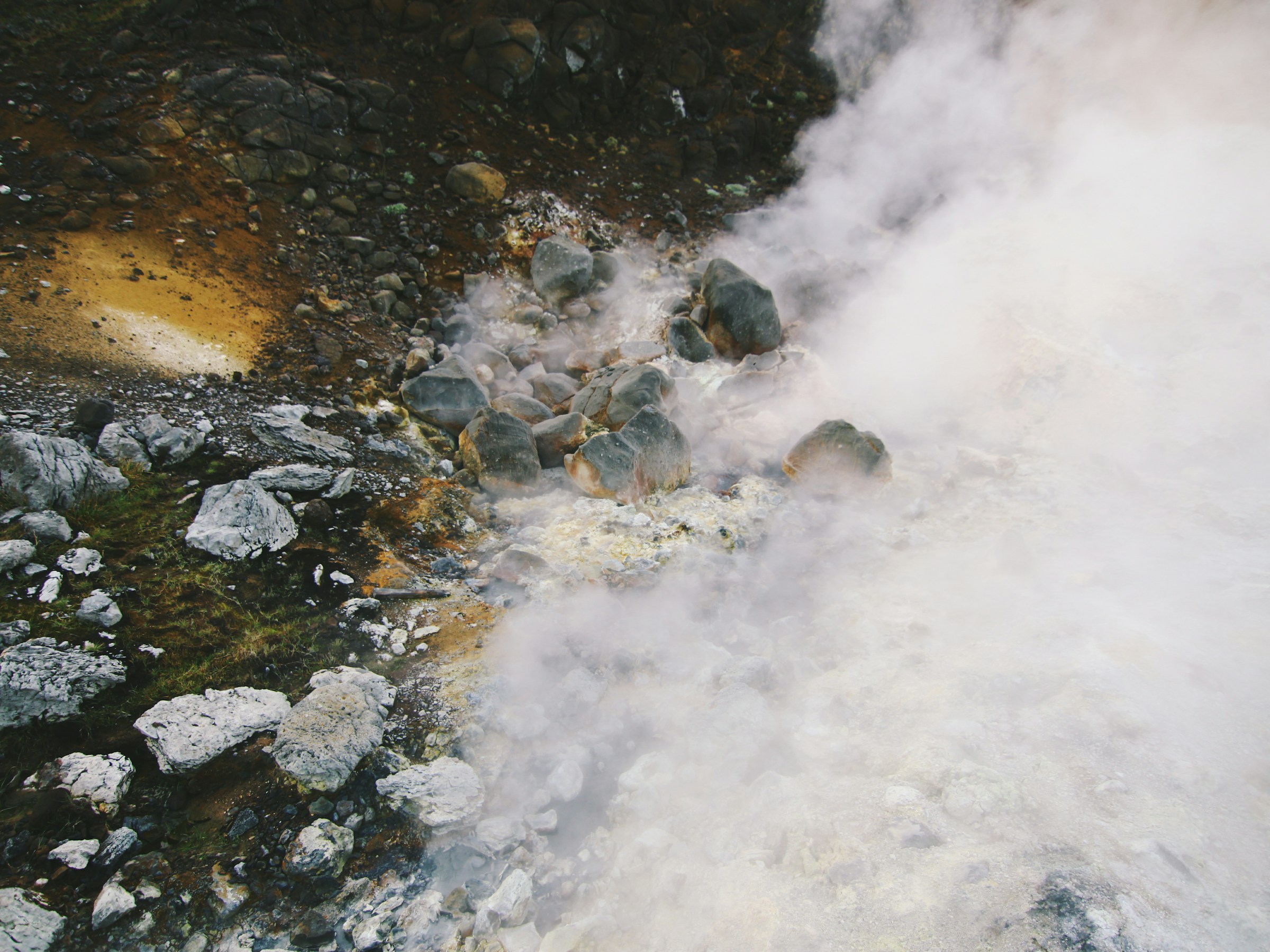
A natural hot spring is groundwater that has been heated underground, usually by proximity to volcanic rock, and has picked up dissolved minerals on the way back up. What it picks up depends entirely on the rock. Saturnia’s water is sulphurous, which is why it smells the way it does and why silver jewellery should stay in the room. Calistoga’s is drawn from a geothermal field beneath the valley floor and has been used for bathing since the 1860s.
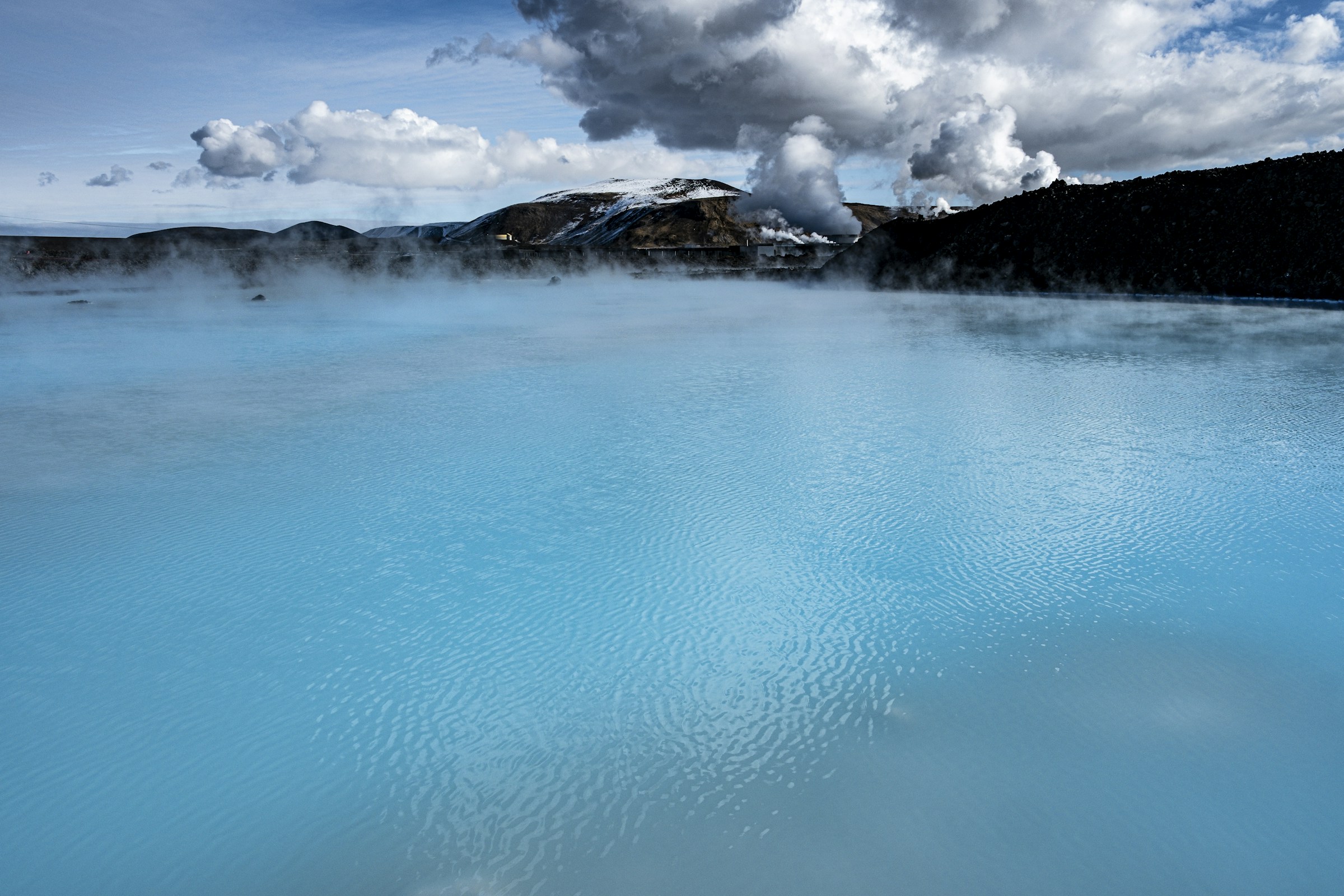
Iceland’s Blue Lagoon is a different thing again, and worth being clear about: the lagoon is man-made, fed by seawater that has passed through the Svartsengi geothermal plant, and it is rich in silica, which is what gives it the opaque milk-blue colour and leaves hair feeling like straw for a day.
As for what it does: warm immersion reliably relaxes muscle, eases stiff joints for a while, and helps most people sleep. It is not a treatment for a medical condition, and we will not tell you it is. If a spring is hot — anything much above 40°C — the sensible pattern is twenty minutes in, cool off, drink water, go back.